Location Tracking via GPS or UHF-RFID – A Technology Comparison
Tracking technology advances every day. GPS tracking devices have long been the standard for determining the position of people, vehicles and objects – with an accuracy of up to 5 metres. But is GPS alone sufficient when pinpoint localisation is required?
How Does GPS Tracking Work?
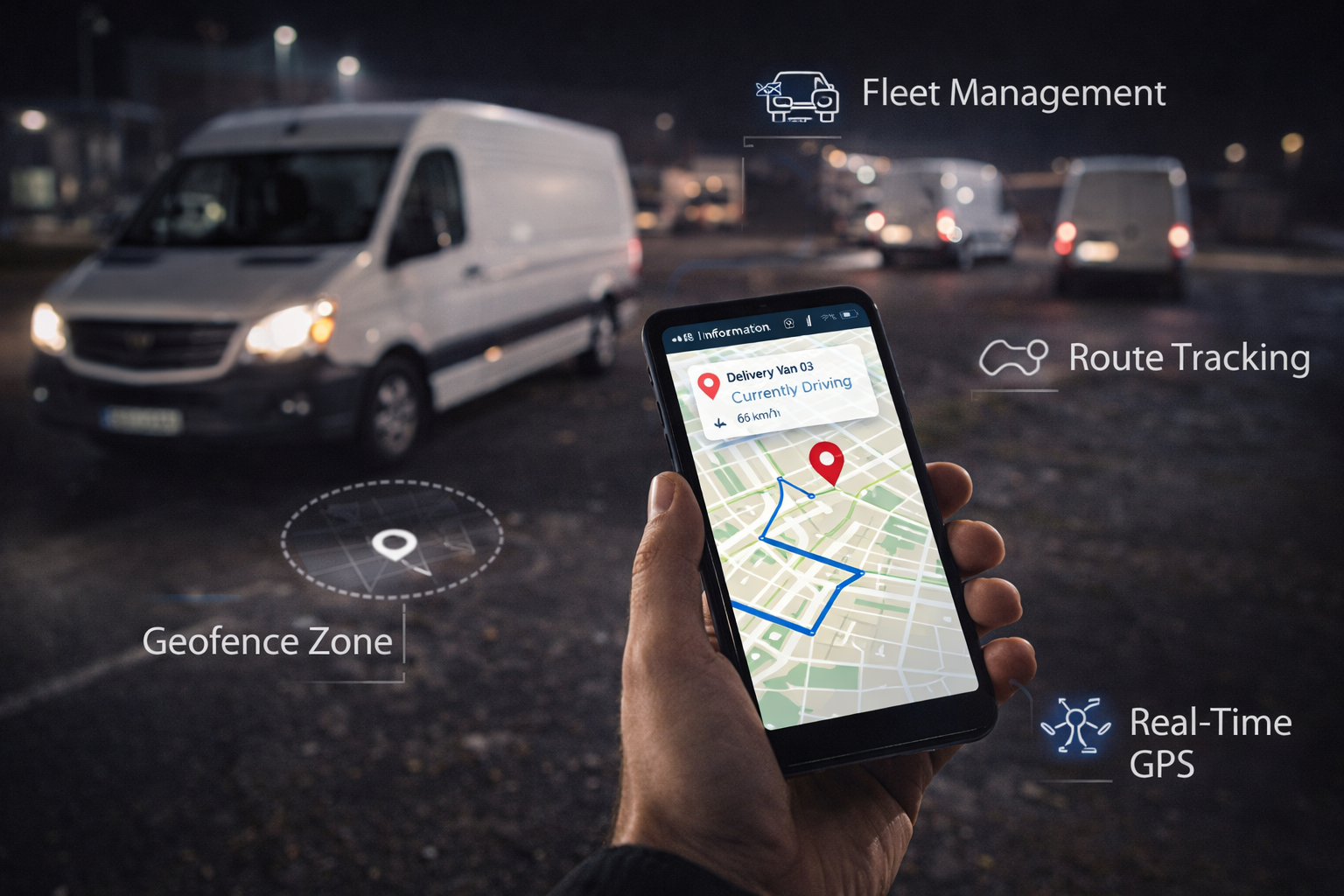
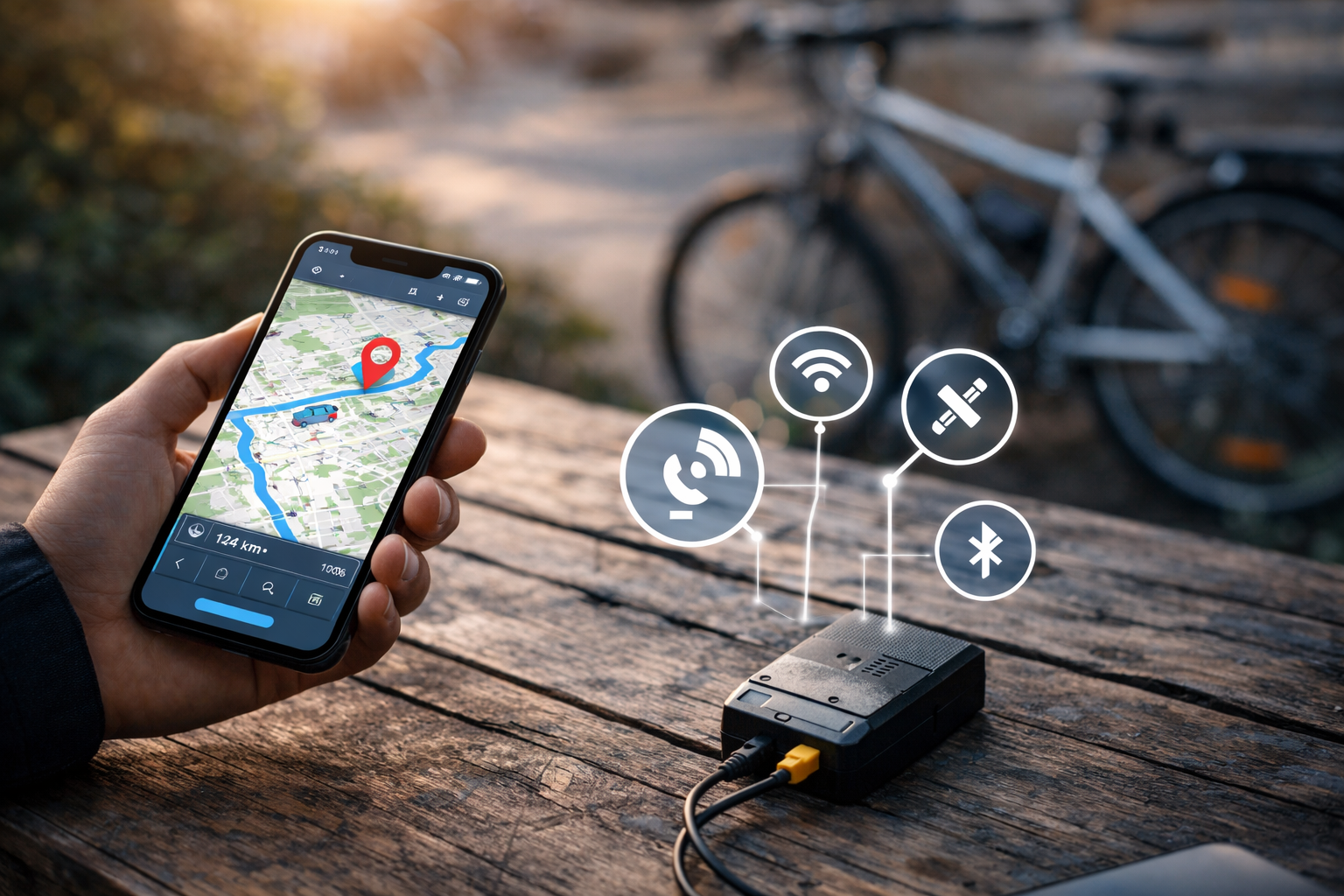
GPS tracking devices receive signals from satellites and calculate the exact position of the device from them. The determined position data is transmitted via data transfer to a server and passed on from there to the end customer. Accuracy is typically up to 5 metres – more than sufficient for most vehicle and fleet tracking applications.
What Is UHF-RFID Technology?
UHF stands for Ultra-High Frequency, RFID for radio-frequency identification. RFID describes a technology for transmitter-receiver systems used for the automatic, contactless identification and localisation of objects and living beings using radio waves.
RFID transponders can appear in various forms – as labels, chips or embedded modules. Crucially, the associated reader contains software (a microprogram) that controls the actual reading process, as well as an interface that connects to other IT systems and databases. This allows the captured position data to be integrated directly into existing logistics and management systems.
GPS and UHF-RFID Combined: 100 Percent Accurate Data
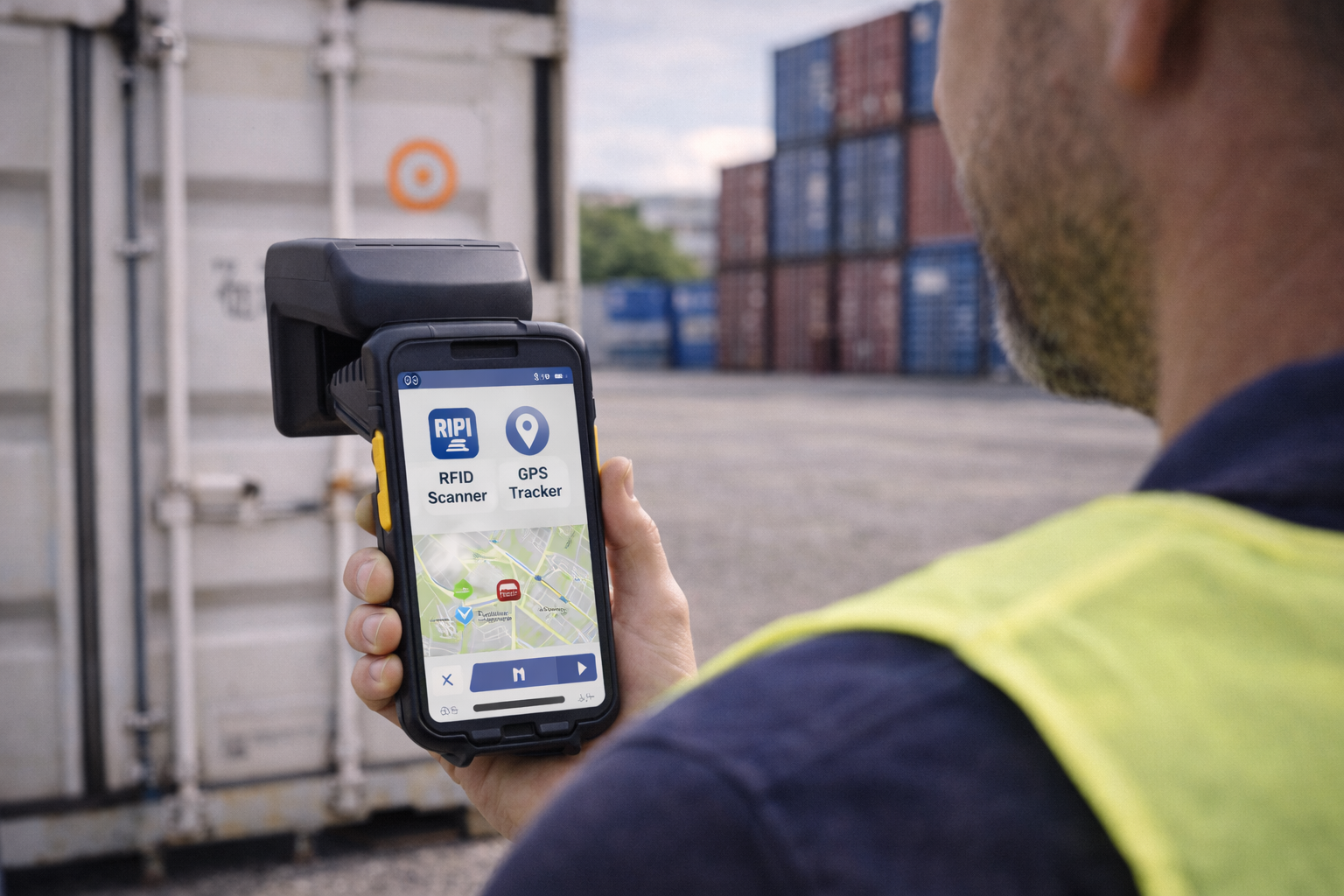
In combination with GPS tracking devices, UHF-RFID technology closes the last information gap in position determination. Dr Wilfried Weiss sums it up:
"With passive UHF-RFID technology, the AutoID-Box closes the last information gap in the position determination of trailers, as it can localise them to the exact point and thus achieves 100 percent transparency in loading processes."
The combination of both technologies therefore delivers 100 percent accurate position data – a decisive advantage for any business that depends on precise delivery, optimised loading processes and minimised idle times.
When Does the Combination of GPS and UHF-RFID Pay Off?
Pure GPS tracking reliably covers the vast majority of requirements in vehicle and fleet monitoring. Adding UHF-RFID is particularly worthwhile when:
- Trailers and swap bodies need to be localised to the exact point on a company premises or terminal
- Loading processes need to be documented automatically and without gaps
- Transparency in the supply chain is critical at the last metre
- Idle times and handling processes need to be continuously optimised
The more accurate the data a business receives, the more it saves in time and costs in the long run.
Conclusion
GPS tracking devices today offer accuracy of up to 5 metres and are the ideal solution for most tracking tasks. Those who additionally require pinpoint position determination – for example in logistics with trailers and loading processes – benefit from combining GPS with passive UHF-RFID technology. Together, both technologies deliver 100 percent transparency and lay the foundation for fully optimised operational processes.