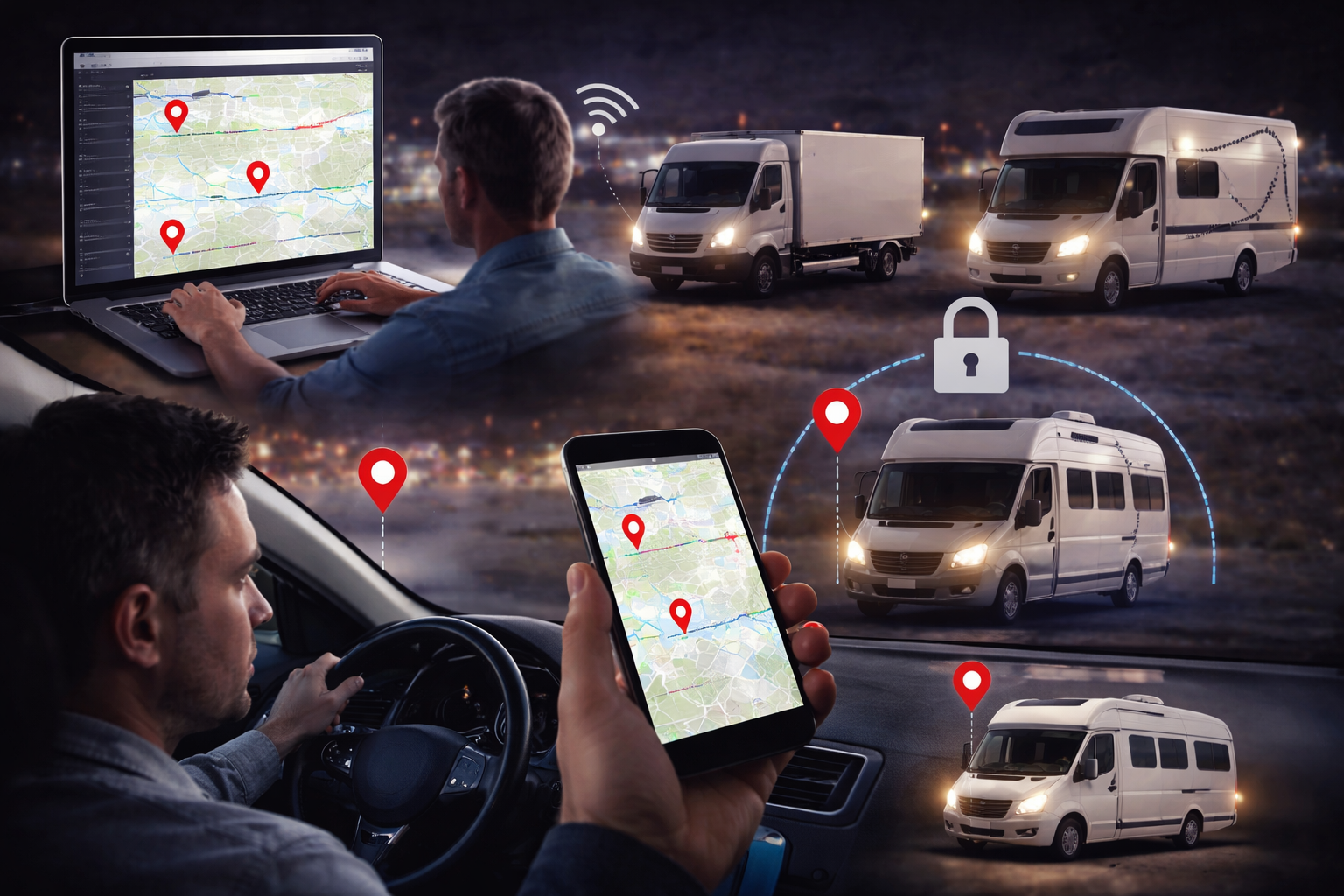
GSM Tracking - Locating Vehicles and Objects via Mobile Network
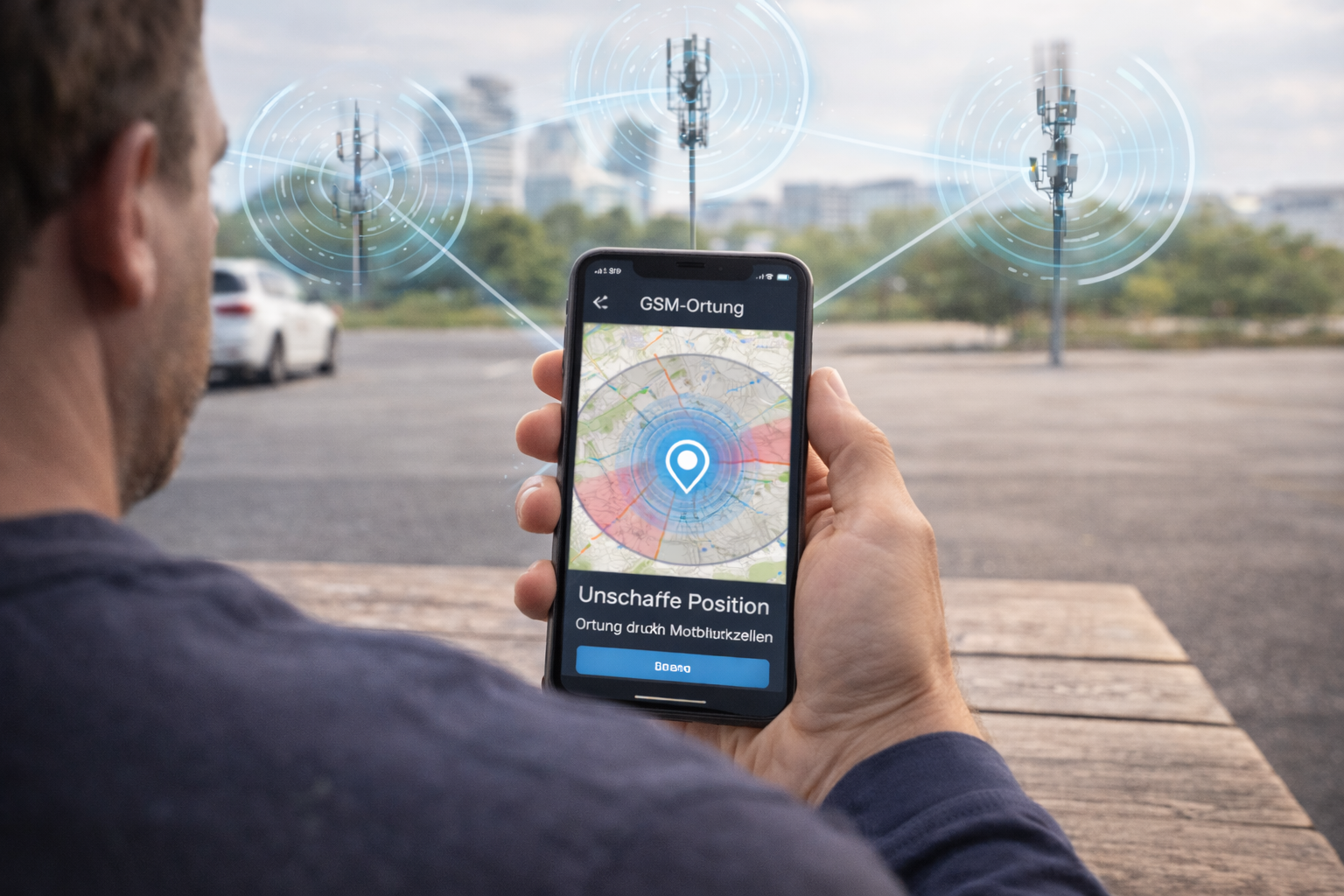
GSM tracking refers to the positioning of vehicles and objects via the mobile network. Unlike pure GPS tracking, which uses satellite signals, GSM tracking is based on detecting mobile masts and their signal strengths. The combination of both technologies – GSM and GPS – is now standard in modern GPS trackers and enables reliable tracking even in areas with poor GPS reception.
How Does GSM Tracking Work?
With GSM tracking, the position of a device is determined based on the surrounding mobile masts (cell-based positioning). The tracking device measures the signal strengths of several masts and calculates an approximate position from this. These data are transmitted via the mobile network (GSM/GPRS/4G) to the online portal, where they are displayed in real time on a map.
GSM vs. GPS – The Key Differences:
| | GSM Tracking | GPS Tracking | |---|---|---| | Accuracy | 100–500 m (depending on urban density) | 5–15 m | | Reception | Anywhere with mobile coverage | Requires clear sky visibility | | Indoors | Limited availability | Barely possible | | Power consumption | Low | Higher | | Suitable for | Approximate location | Precise live tracking |
When Does GSM Tracking Make Sense?
GSM tracking is sufficient when high-precision positioning is not required – for example for an approximate fix on an object or as a fallback technology when GPS signal is unavailable. For precise vehicle tracking, geofencing and theft protection, combined GPS/GSM tracking is recommended.
Typical Areas of Application:
- Vehicle tracking in cities – GSM bridges areas with weak GPS signal
- Object tracking – approximate location of containers, trailers or machinery
- Personal tracking – locating people or vehicles without high-precision positioning requirements
- Backup tracking – automatic switch to GSM when GPS is unavailable
GPS/GSM Combination: The Best of Both Worlds
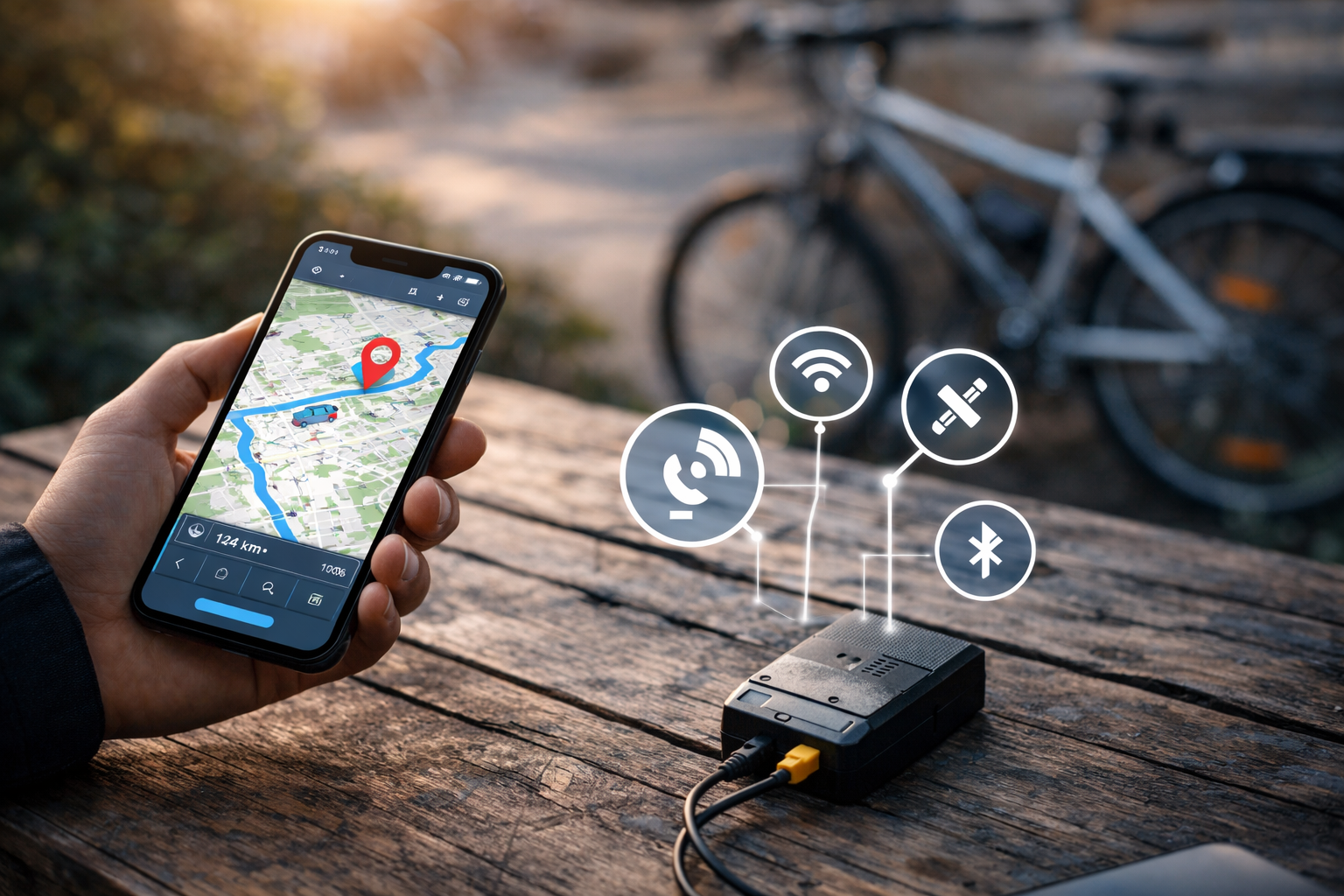
Modern GPS trackers from Jumbo Ortung use both GPS and GSM technology simultaneously. The GPS module delivers highly accurate position data outdoors, while the GSM module ensures data transmission and provides backup positioning in GPS-weak areas. This guarantees seamless monitoring even in tunnels, underground car parks or densely built-up city centres.
Advantages of Combined Tracking:
- Precise GPS tracking outdoors (5–15 m accuracy)
- GSM as fallback when satellite reception is poor
- Seamless data transmission via the mobile network
- Works across Europe with nationwide network coverage in Germany
GSM Tracking for Vehicle Fleets
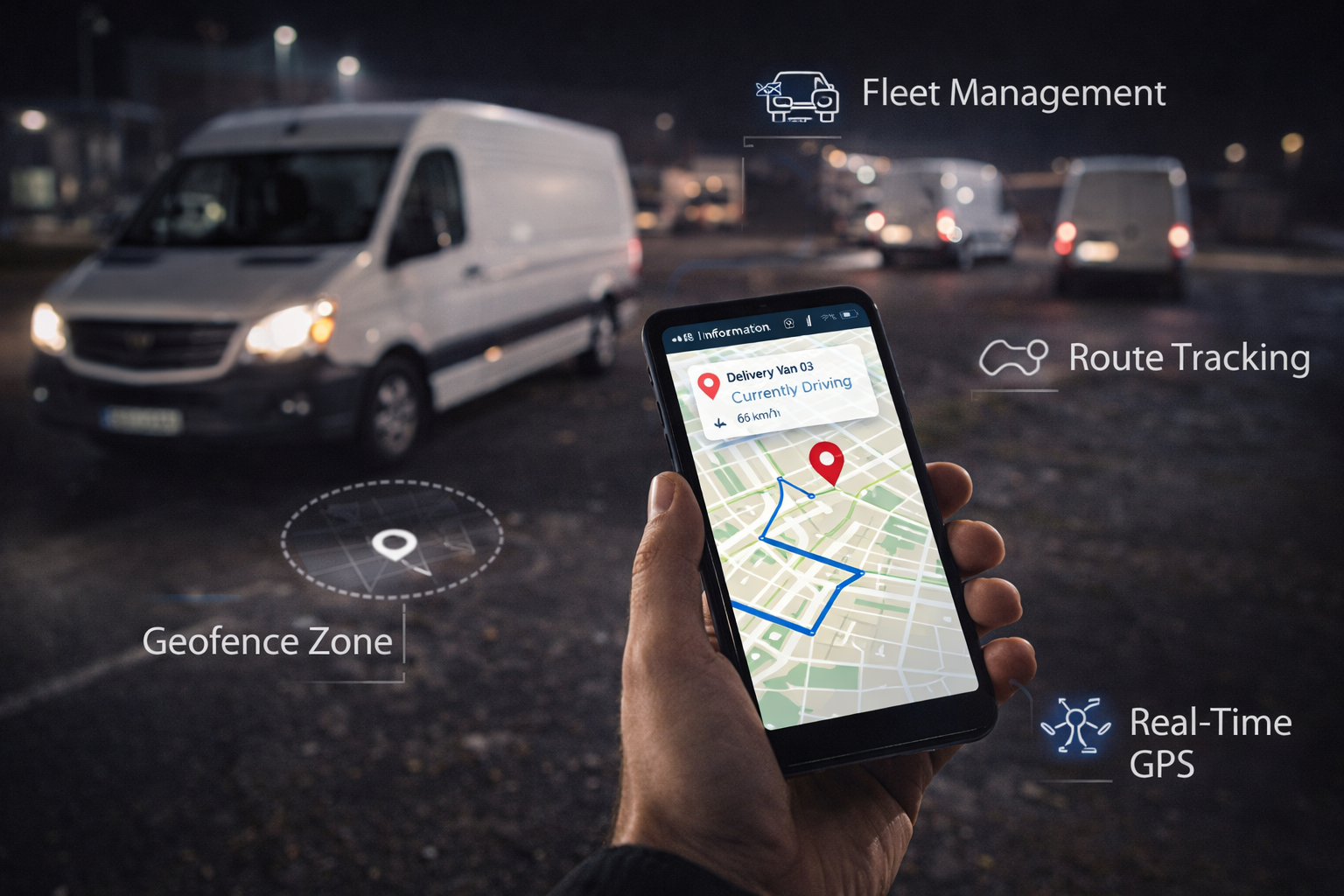
GSM also plays a central role in commercial vehicle tracking – not as a standalone tracking method, but as the transmission medium for GPS data. The GPS coordinates are sent via GSM/GPRS/4G to the online portal, where all vehicles are visible on a map.
Features of GPS/GSM Vehicle Tracking:
- Live location of all vehicles on a single map
- Speed and driving behaviour display
- Geofencing with instant SMS/email alerts
- Route history and daily reports
- Theft protection and towing alerts
- Access via smartphone, tablet and PC
Conclusion: GSM Tracking as Part of Modern GPS Tracking Systems
GSM tracking is straightforward and sufficient for many use cases – however, for precise live tracking it should always be combined with GPS. The GPS trackers from Jumbo Ortung optimally utilise both technologies and thus provide reliable, seamless tracking for vehicles, objects and fleets of all sizes.
Have questions? Give us a call: